

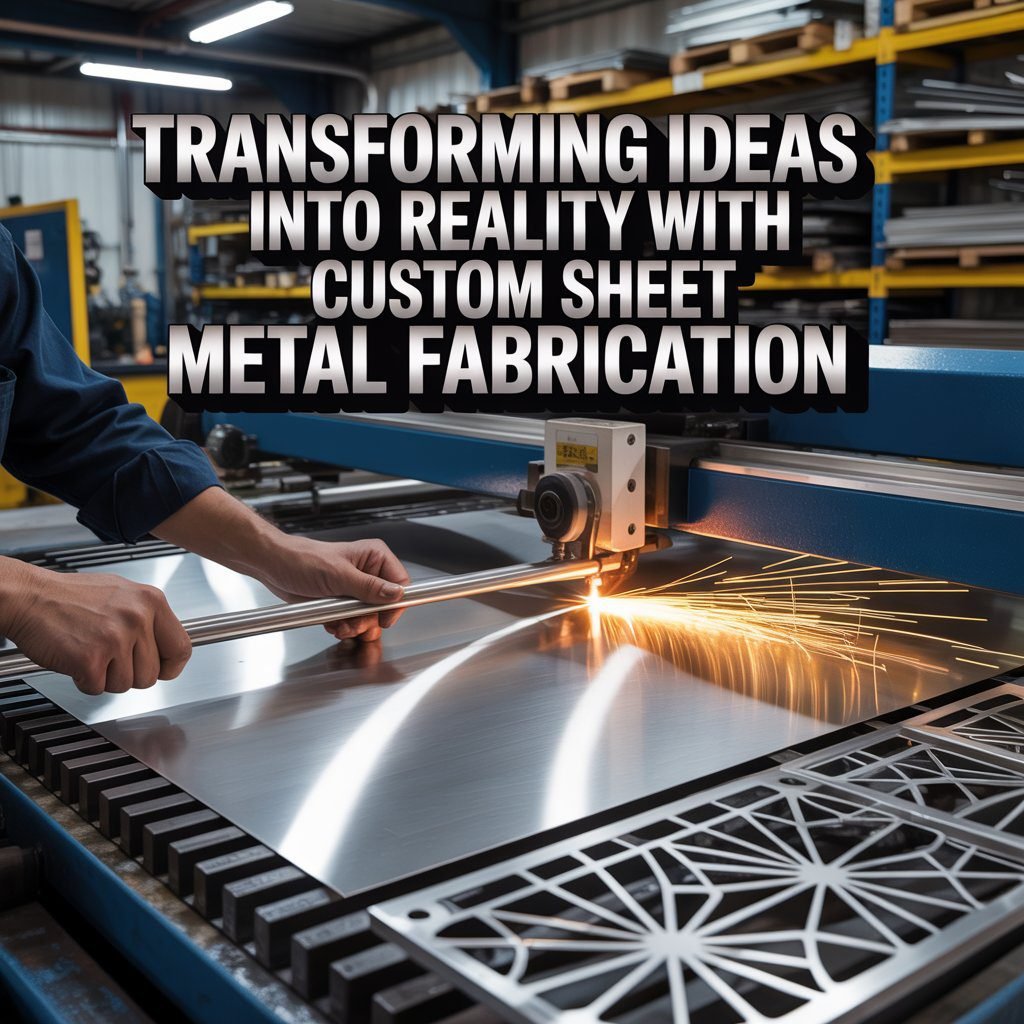
In the high-stakes arena of modern manufacturing, where the margin for error is measured in microns, the ability to transform a conceptual sketch into a high-performance component is a defining competitive advantage. This transformation is driven by custom sheet metal fabrication, a discipline that sits at the intersection of rigorous engineering and artisanal craftsmanship. From the sleek, aerodynamic panels of aerospace vehicles to the sophisticated enclosures housing our digital infrastructure, this process is the silent engine of industrial innovation.
The Anatomy of Fabrication: Where Logic Meets Form
To the uninitiated, sheet metal might seem like a simple commodity, but in the hands of a master fabricator, it is a versatile medium of immense potential. The journey from a raw coil of alloy to a finished assembly is a complex, multi-stage evolution that begins long before a single cut is made.
The process initiates with a deep-dive feasibility study. In this conceptual phase, engineers and designers collaborate to weigh the ideal design against the physical realities of the material. They must account for the metal’s grain structure, its spring-back tendencies during bending, and its thermal reaction to welding. This is where technical expertise is most critical. A design that looks flawless on a screen must be grounded in the laws of physics to be manufacturable.
Once the concept is solidified, it enters the digital design phase. Using sophisticated Computer-Aided Design (CAD) and Computer-Aided Manufacturing (CAM) software, engineers create a three-dimensional blueprint. These programs allow for virtual stress testing and unfolding simulations, which calculate the exact flat dimensions required to achieve a complex finished shape. This digital twin serves as the master guide for every subsequent laser pulse and press-brake stroke.
The Technological Renaissance in the Shop
The traditional image of a metal shop, once filled with manual shears and hammers, has been replaced by a landscape of automated precision. The integration of Computer Numerical Control (CNC) technology has fundamentally redefined what is possible in custom sheet metal fabrication.
CNC machinery acts as the bridge between digital intent and physical execution. These systems can interpret CAD files to perform intricate cuts and bends with a level of repeatability that human hands could never sustain. The true revolution, however, lies in the cutting technologies themselves.
- Fiber Laser Cutting: By concentrating a high-energy light beam, fiber lasers can slice through thick plate or thin foil with incredible speed, leaving a burr-free edge that often requires no secondary finishing.
- Waterjet Cutting: For materials that are sensitive to heat, waterjet cutting uses a high-pressure stream of water mixed with abrasive garnet. This cold cutting process prevents the heat-affected zone that can sometimes compromise the molecular integrity of certain alloys.
- Automated Press Brakes: Modern bending stations utilize robotic arms and laser-sighted sensors to ensure every angle is precise to within a fraction of a degree. This technology ensures that multi-part assemblies fit together with seamless accuracy.
Architectural Marvels: The Skin of the Modern City
Beyond the factory floor, custom sheet metal fabrication has become the primary language of contemporary architecture. Architects are no longer limited to the rigid geometries of brick and concrete. They can now clothe buildings in flowing, metallic skins that reflect the environment and challenge the horizon.
Consider the undulating titanium curves of the Guggenheim Museum in Bilbao or the shimmering stainless-steel panels of the Walt Disney Concert Hall. These structures are only possible because of advanced fabrication techniques that allow for the production of thousands of unique, non-repeating panels.
This trend is increasingly driven by sustainability. Metal is one of the most circular materials in existence. Aluminum and steel can be recycled infinitely without losing their structural properties, making them the preferred choice for green building envelopes. Furthermore, custom-fabricated sunshades and perforated facades help manage a building’s thermal load, which reduces the energy required for cooling. This proves that high-end design can also be highly responsible.
Powering the Industry: Specialized Solutions Across Sectors
The impact of bespoke metalwork is most visible in the sectors that define our daily lives. In the automotive industry, the transition to electric vehicles (EVs) has triggered a massive demand for custom aluminum battery enclosures. These components must be lightweight to preserve range, yet they must also be strong enough to protect the power cells during a collision.
The HVAC (Heating, Ventilation, and Air Conditioning) sector similarly relies on custom solutions to maximize airflow efficiency. Mass-produced ductwork often results in energy loss through poor fitment. Custom-fabricated transitions and plenums ensure a hermetic seal that optimizes indoor air quality while slashing utility costs.
In the aerospace and medical sectors, the stakes are even higher. Here, fabrication involves exotic alloys like Inconel or surgical-grade stainless steel. Whether it is a bracket for a satellite or a chassis for a diagnostic imaging machine, these parts must withstand extreme environments, such as the vacuum of space or the rigorous sterilization cycles of an operating room.
Material Science: The Foundation of Success
A successful fabrication project is only as good as the metal specified at the outset. Choosing the right material is a balance of mechanical requirements, environmental exposure, and budgetary constraints.
- Aluminum: This material is prized for its high strength-to-weight ratio and natural oxide layer that resists corrosion. It is the gold standard for transportation and outdoor electronics.
- Stainless Steel: This is the go-to for hygiene and aesthetics. Its chromium content provides excellent resistance to staining and rust, making it indispensable for food service and medical environments.
- Copper and Brass: Beyond their striking visual appeal, these metals are selected for their superior electrical and thermal conductivity. They are frequently used in high-end architectural accents and complex electrical switchgear.
- Galvanized Steel: By coating carbon steel in a layer of zinc, fabricators can offer a rugged and cost-effective solution for industrial applications where long-term weather resistance is required.
The selection of the metal also dictates the aesthetic finish. A fabricator can take a single sheet of stainless steel and turn it into a mirror-polished focal point or a dull-brushed industrial component, depending on the client’s vision.
The Collaborative Core: Moving Beyond the Transaction
One of the most significant shifts in the industry is the move from vendor to partner. The most successful projects are not those where a client simply hands over a drawing. Instead, they are the result of a creative dialogue.
When a client engages a fabricator early in the design process, they gain access to Design for Manufacturing (DFM) insights. A seasoned fabricator can often suggest slight modifications, such as changing a radius or consolidating two parts into one, that significantly reduce production costs and improve structural integrity without compromising the original vision. This partnership turns the fabrication shop into an extension of the client’s own research and development department.
The Power of the Prototype
In the world of custom sheet metal fabrication, the prototype is the ultimate insurance policy. Even with the most advanced 3D simulations, there is no substitute for a physical model. Prototyping allows stakeholders to hold the part, test its fit within a larger assembly, and verify its tactile qualities.
The iterative nature of prototyping is where true innovation happens. It provides a low-risk environment to experiment with different tolerances or assembly methods. For a startup developing a new consumer product, a high-fidelity metal prototype is often the key to securing investor confidence or winning a major contract. It moves the conversation from a theoretical “what if” to a tangible reality.
Precision in the Face of Regulation
Navigating the technical landscape also means navigating a web of international standards and regulations. Depending on the application, fabricated parts may need to meet ISO standards, aerospace-specific AS9100 requirements, or local building codes for structural safety.
Quality control is not a final step in the process; it is woven into every stage. Advanced shops utilize coordinate measuring machines (CMM) and laser scanners to inspect finished parts against the original CAD model. This ensures that every hole, notch, and flange is exactly where it needs to be. For critical industries, this level of documentation and traceability is not just a preference. It is a legal requirement that protects both the manufacturer and the end-user.
A Legacy of Transformation
As we look toward the future of manufacturing, it is clear that the demand for customization will only grow. The era of one-size-fits-all is ending, replaced by a world where products are tailored to specific niches and individual needs.
Custom sheet metal work is uniquely positioned to lead this charge. It offers a level of durability that plastics cannot match and a speed of iteration that traditional casting and forging cannot provide. It is a process that respects the heritage of the blacksmith while embracing the digital tools of the future.
Ultimately, the story of metal fabrication is a story of human ingenuity. It is about taking the raw elements of the earth and, through a combination of heat, pressure, and logic, turning them into the skeletons and skins of our modern world. Whether it is a small-scale artisanal project or a massive industrial undertaking, the goal remains the same. The intent is to take an idea that exists only in the mind and give it the strength, beauty, and permanence of metal.
In this journey from concept to reality, the fabricator is the essential link. By blending advanced technology with a deep understanding of material science, they ensure that our most ambitious ideas do not just remain on the drawing board. Instead, they are built to last.